About Kjell Aukrust
The illustrator, painter, author, inventor and humorist
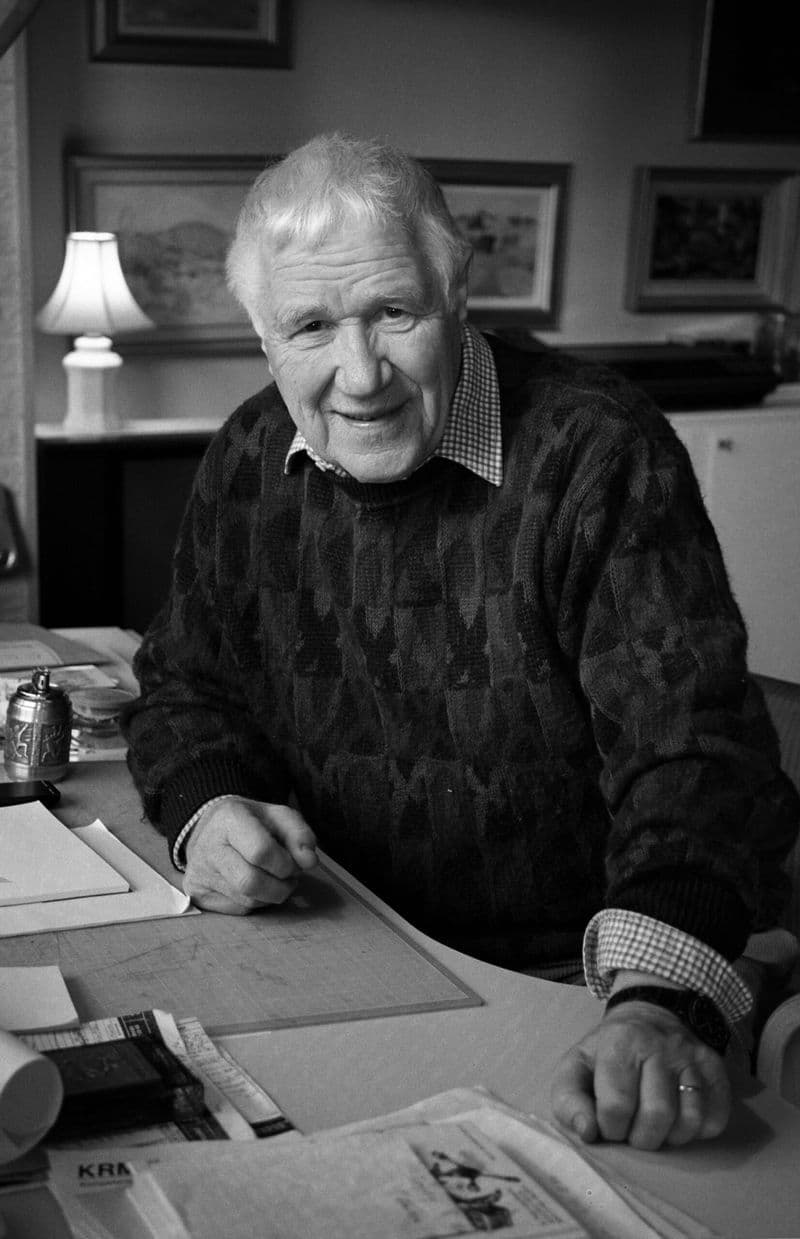
- I grew up among cows, pigs, horses, hens, Old Norwegian sheep, agronomists from Østerdalen, and an ill-tempered welder from Solør. It was at Storsteigen Agricultural School in Alvdal, where my father was principal.
This is how Kjell Aukrust himself describes his childhood and upbringing in Alvdal in one of his books. With that foundation and inspiration, Kjell became one of our most beloved artists: illustrator, author, painter, inventor, humorist.
The illustrator
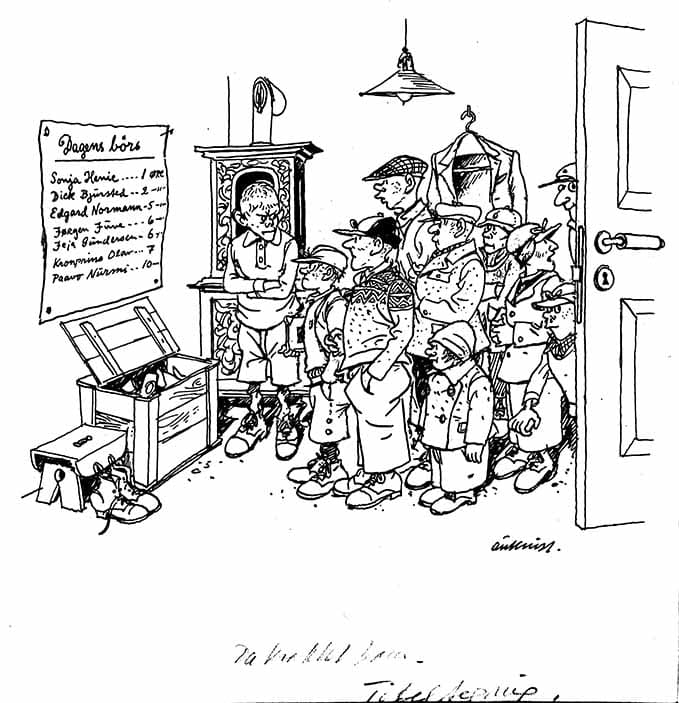
People have often said about Kjell Aukrust that he was, above all, an illustrator. That is easy to understand. His vivid lines from the Alvdal of his childhood, or from Italy, and the rich cast of characters he created on the border between fiction and reality have made him one of our most beloved illustrators.
Kjell Aukrust was admitted to the drawing programme at the Norwegian National Academy of Craft and Art Industry at the age of just 16. “Kjell Aukrust is, or will become, a painter — he attends art school. Let him in,” Henrik Sørensen wrote to the school’s principal in 1936. In 1939, one of his drawings was accepted for the Autumn Exhibition. Kjell’s drawings can be found in a wide range of magazines and books. Risen i Jutulfjell, with text by Olav O. Aukrust and illustrations by Kjell Aukrust, was named the year’s most beautiful book in 1949. That was when his career as an illustrator took off. Among other things, he was commissioned to illustrate Asbjørnsen and Moe’s folk tales.
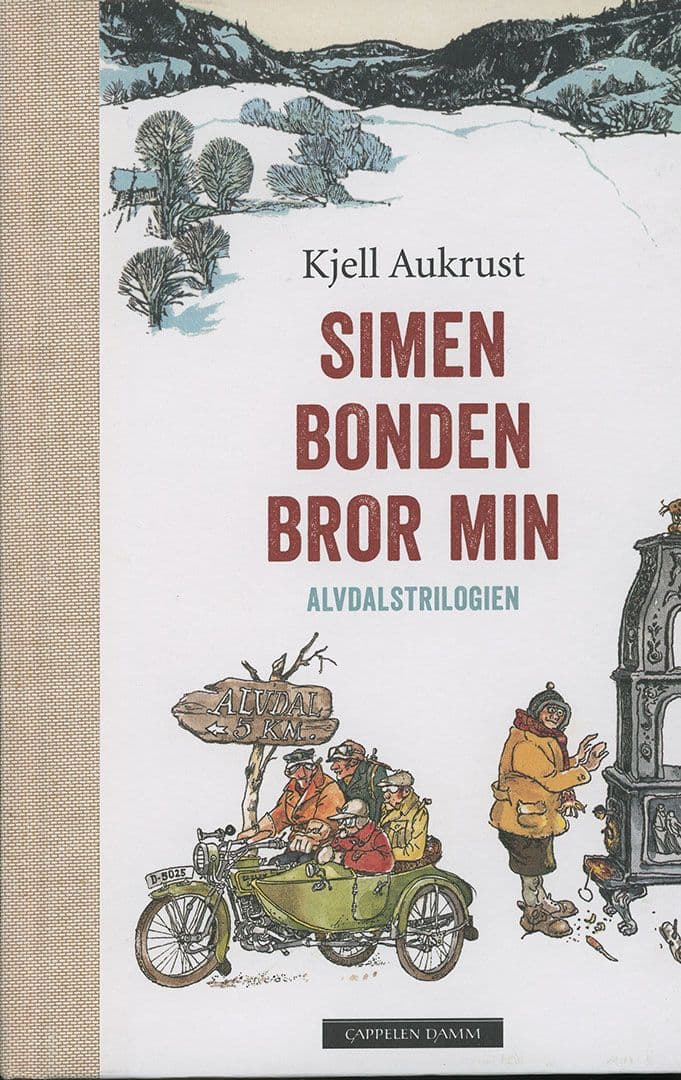
In 1958, he made his debut as an author with the book Simen, drawn from his childhood surroundings in Alvdal. It was soon followed by the sequels Bror min and Bonden. In Kjell Aukrust’s work, text and drawing are closely connected. For that reason, Kjell’s drawings are miniatures, drawings on a book page, or even smaller.
Before it was published in book form, the cast of characters in Flåklypa Tidende was presented in a humorous series in Forsvarets Mannskapsavisa.
The painter
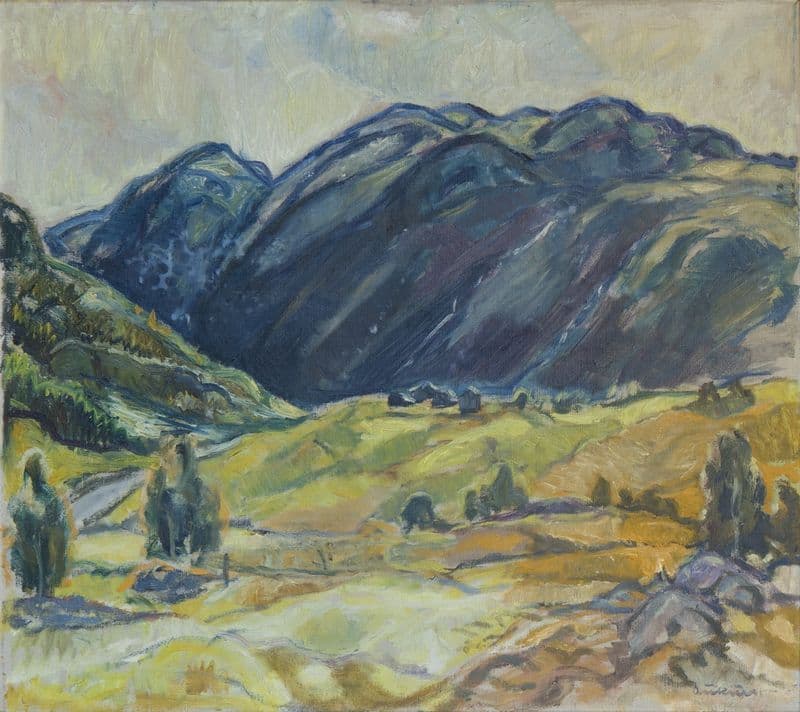
Kjell Aukrust was really supposed to become a painter. In later adulthood, he finally did. In his final years, he spent more and more time with a paintbrush in hand. Increasingly melancholic and experimental in his exploration of the play of light across nature and buildings, he developed his lesser-known artistic side.
In the early years of his career, Kjell Aukrust was a painter, and he made his debut at the Autumn Exhibition in 1945 with “Barna i skogen”. When the Norwegian National Academy of Craft and Art Industry and the Academy of Fine Art were closed in 1942 because of the war, Kjell moved back to Alvdal to paint. During two summers in the war years, he was also in Røros and Bøverdalen, painting together with several young artists.
But drawing became his main occupation. Forty years later, in the 1980s, he took up the paintbrush again. Well over a hundred paintings were created during this final period, most of them painted in acrylic and watercolour.
The paintings from this period are different from the drawings, both in content and form. But when it comes to format, Kjell Aukrust remains true to himself. “…he has no urge to be a monumental painter,” Finn Jor wrote in the book Galleri Aukrust. As in the drawings, framing and precision are what matter most. Many of the motifs are drawn from Italy.
The author
Kjell Aukrust probably saw himself primarily as a visual artist and first and foremost an illustrator, but he made his debut as an author as early as 1958 with the book Simen. It became the sensation of the year and was printed in an edition of well over 100,000 copies. Simen, which is about growing up in Alvdal, began as short pieces in Dagbladet. Simen, Bonden and Bror min make up the Alvdal trilogy.
Kjell Aukrust was associated with Dagbladet throughout the most active years of his career; as early as 1949, «Home from Paris with 18 Hazelnuts» was published in Dagbladet. In 1946, Kjell joined Mannskapsavisa to complete his compulsory military service. He started out as a newspaper delivery boy and cliché archive clerk, but before long he began drawing and writing, and it was in Mannskapsavisa that the Flåklypa universe was born, first as «Our Fools», then «People and Beasts», and later «Flåklypa Tidende».
In 1966, the book Je og 'n Solan was published, and in 1977 came Ludvig. Solan and Ludvig are Kjell’s alter egos: «Ludvig emerged inside me after I turned 50. The cheerful, self-assured daredevil was something that raged inside me before then.» Most people recognize themselves in Kjell Aukrust’s stories.
He draws and writes equally well. Text and illustrations reinforce each other, and he uses words sparingly. He writes short, expressive sentences. Beneath the gentle, warm humour, we sense the seriousness. It is easy to agree with Finn Jor: «The more times one reads Kjell Aukrust’s books, the more convinced one becomes that he is, above all, a poet».
In the autumn of 2012, NRK encouraged people to vote for Norway’s funniest book, and readers responded to the call. Kjell Aukrust’s Alvdal trilogy, Simen, Bror min and Bonden, was named Norway’s funniest book.